Bibi Bannink on Girls To The Front: “I was looking for a different sound, forms of representation, and people I could connect with”
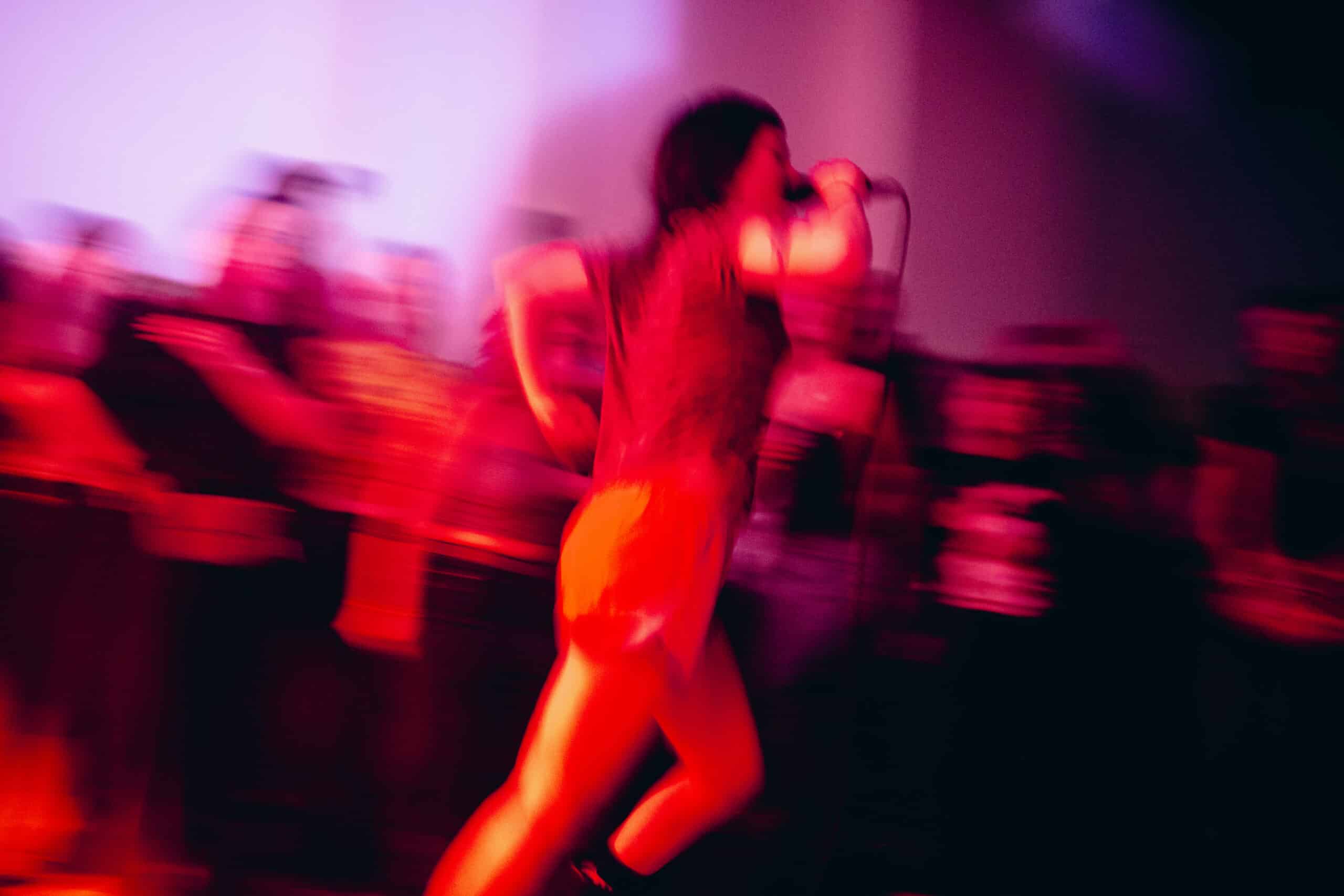
Girls to the front! The rallying slogan of the ’90s riot grrrl movement is still resonating today. Founded by Bibi Bannink, the Girls To The Front collective gives FLINTA*-fronted (Female, Lesbian, Intersex, Non-binary, Trans & Agender) bands a stage, making space for different sounds, stories and perspectives. With shows across the country, two compilation albums and its own zine, the DIY initiative is building on a growing platform. Last year, Girls To The Front curated an evening at Café The Jack during Hit The City. This year, the programme expands to both halls at Effenaar. On the line-up: Lambrini Girls, Jools, Vals Alarm, L.A. Sagne, Snackbar and more.
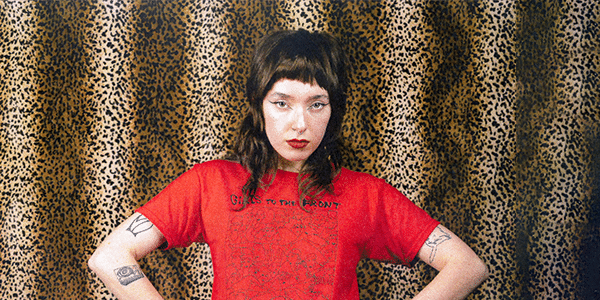
“I think this is the kind of line-up that will also draw people who don’t live in Eindhoven. I’m curious to see what it will look like on the night itself” Bibi Bannink says. “Especially after everything that has happened recently surrounding Sophie Straat. Will there be more friction, or more openness?”
There were clear ambitions when putting the line-up together: bringing international and local bands together, giving Girls To The Front acts – and the audience – literally more space, and showcasing a diversity of sounds. “That also represents both GTTF compilation albums. It’s not necessarily punk in the way you might initially associate with it, with simple riffs. You also hear complex art-punk or darkwave, for example. That diversity is reflected in the line-up.”
We’re very angry, but we’re in this together
The idea for Girls To The Front emerged just over two years ago, when Bibi was only eighteen. On International Working Women’s Day, she organised her first event at dB’s in Utrecht. It came from her own love of punk, but also from the fact that many of the emerging punk bands around her were predominantly made up of men.
“I wanted to organise something that brought my two interests, punk and feminism, together. I listened to a lot of punk, read a lot about the riot grrrl movement and wanted to surround myself with people who were also part of that. I mainly just wanted to be at a show like that myself. I was looking for a different sound, different forms of representation and different people I could connect with.”
But from the beginning, it was about more than just who was on stage. “It also came from a need to give space to the political side of a day like that, to the ongoing urgency.” By incorporating self-written poetry between the shows, she tries to stimulate discussion and create a sense of community. “That’s something I’ve found really important and special at protests too. You can really feel that we’re very angry, but we’re also all in this together. And from that comes a kind of love and a certain sense of community.”
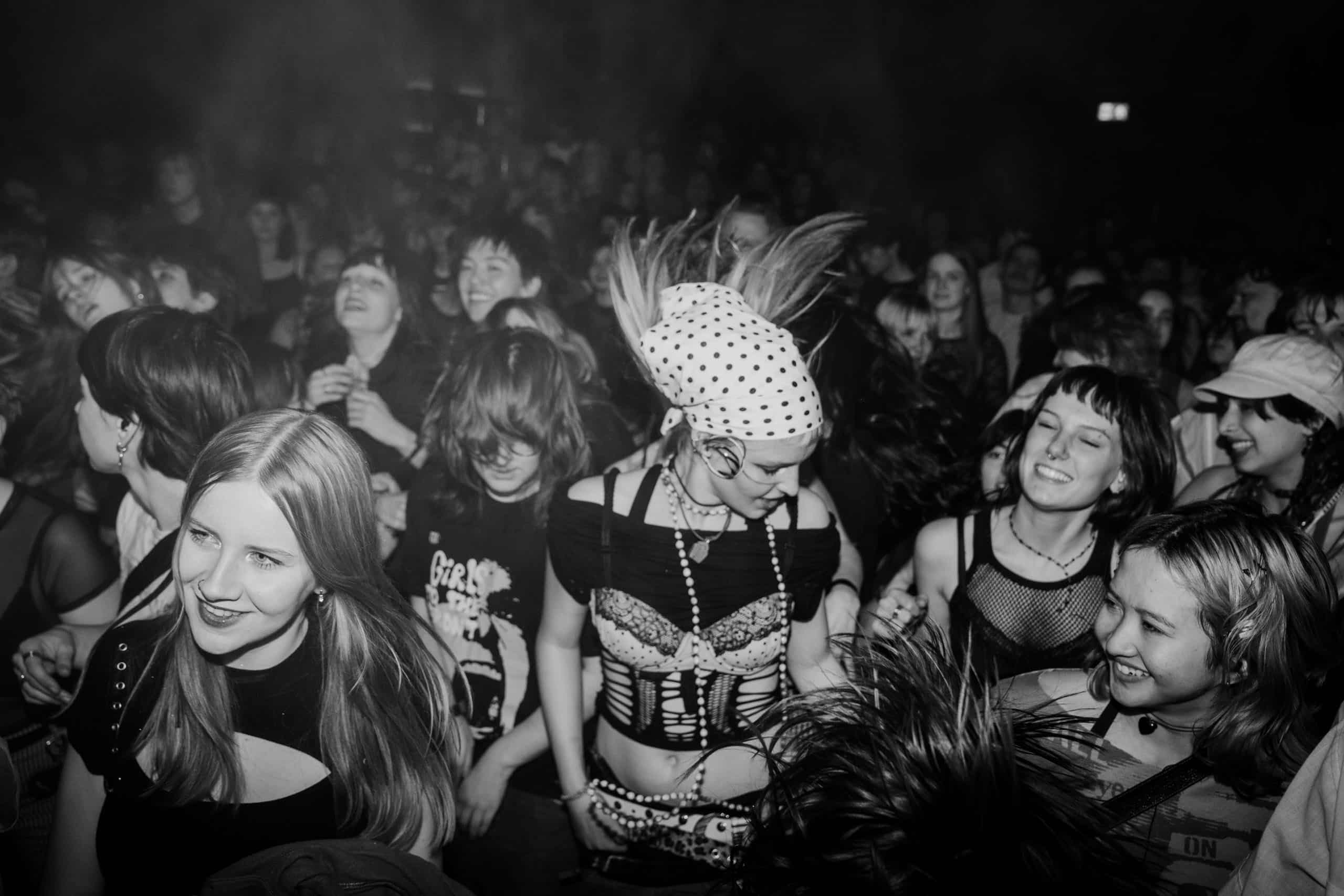
That sense of collectivity became very visible during that first event, and more specifically, in the mosh pit where making space was just as important as taking up space. “People enjoyed being there together, and the mosh pit was also a completely different kind of mosh pit. It was more about: we share this physical space, we want to be here together, we want to let go, and we want to do that while looking out for each other.”
Punk is supposed to create friction
Where the riot grrrls shook up the scene in the ’90s, with women and queer people pushing back against sexism and male-dominated power structures, the slogan girls to the front is once again hitting hard thirty years later. Especially following the recent wave of hate and threats directed at Sophie Straat, among others.
“In some ways, I really feel like: this is what punk means to me. It creates friction. It clashes with the mainstream and with more right-wing ideologies. The way people have responded to the media coverage of Sophie Straat really speaks to the kind of neofascist and individualised society we live in, and emphasises that we all have a responsibility to address this and speak up about it. Part of me is glad that this public debate is happening, because punk is suddenly becoming visible to people who aren’t exposed to it very often. And they’re getting angry about it”, Bibi says.
“But it also makes me sad because it symbolises such a polarised society. I’ve thought a lot about what a Girls To The Front event can mean in this renewed spotlight. It’s even more important for people to take up space now. But at the same time, I wonder: how can we build more of a bridge? How can we help people who might be further removed from it understand? Maybe an event is no longer enough to achieve that goal, if that even is the goal. But it’s something I’ve been thinking about a lot.”
That question becomes even more interesting now that Girls To The Front is receiving increasing attention: from shows at venues across the Netherlands to major festivals such as Down The Rabbit Hole. The bigger the stage, the greater the reach? “We want to distance ourselves as much as possible from commercial festivals and venues sponsored by all kinds of things that, in many ways, don’t align with our ideology or what a punk initiative should represent. On the other hand, because there’s such a strong social message behind it, you want that voice to have a bigger platform.”
That bigger platform also means reaching an audience that might not automatically come to a Girls To The Front show. “I think it’s important not to stay exclusively within the punk scene, because that can become a bit of preaching to the choir. Bigger stages are also simply really exciting for the bands. We’re doing this because we genuinely want to give their talent a larger platform, and bring their music to a wider audience. And by doing that, you automatically move beyond the DIY scene.
We think a lot about our target audience and how we want this message to come across. But at a big festival, for example, we’ve experienced quite a lot of friction with men taking up a huge amount of space and laughing at us when we tried to reclaim it. I think we should do this more often in places where our ideas aren’t necessarily taken for granted. But sometimes I wonder: can we really do that this way? Or does it require a much more structural change to ensure safety and inclusivity?”
What even is the punk scene nowadays?
“What even is the punk scene nowadays?” she asks out loud. “There are still squats and DIY initiatives that have so much value, of course, but a lot has also become commercialised in this era of late-stage capitalism. You’re basically always paying nine euros for a ticket. I fully stand behind what we’re doing, but I also find it difficult to see what position we’re taking within the punk movement. But it’s also really fun to philosophise about it, to try things out and think: is this the direction we want to take, or should we approach things differently?”
The constant questioning of what the scene is and can look like when different voices are deliberately placed at the center is part of the movement itself. According to Bibi, there is still plenty of work to be done. “I think this movement is still very white and cis-dominated. We want to engage with themes connected to the feminist movement, but also way beyond that. We want to make more zines and create more content to emphasise that Girls To The Front is about
more than records and shows.”
The ambitions now extend far beyond concert venues. “My big dream is to create a physical space – like the one in the important documentary De stad was van ons – with a group of FLINTA people, turning it into a large studio and community space where you can organise shows, but also film nights or book clubs. A place where you can think about important subjects such as feminism. Or a free festival where we collaborate with other collectives and showcase different voices, with the money raised going towards something we all believe in.”
Girls To The Front at Hit The City
But first: Hit The City. On 28 August, Girls To The Front will take over Effenaar. Bibi herself is particularly looking forward to two acts: “When it comes to the bands, I’m really looking forward to PISS and Jools. I listen to them a lot.”
Perhaps the real appeal of the night goes beyond what happens on stage. The message behind Girls To The Front is simple: make space for people who aren’t always given that space by default. Not only to be angry and kick against something, but to collectively create something new.
“I always get so happy seeing young queer people being completely themselves, being inspired by the space and dancing together. And being able to express their anger at the world around them in a different way, but doing it together in a supportive environment. I hope they can mosh as hard as they want, in a way that allows them to be less conscious of their own bodies and simply take up whatever space they want to take. I hope everyone can come into it with an open mind and that it encourages conversations. And that men are open to seeing what happens rather than inserting themselves into it”